Reconcilation Resources
Early Childhood Australia recognises that connections with place and people are central to the wellbeing of young children and their families, and that building relationships with Aboriginal and Torres Strait Islander peoples will bring about a positive change, not only for children but also for whole communities. Explore a list of resources and online information for Early Childhood Educators.
Acknowledgement of Country
Early Childhood Australia acknowledges the traditional owners of Country throughout Australia and their continuing connection to land and community. We pay our respects to them and their cultures, and to the Elders both past and present. Incorporating welcoming and acknowledgement protocols into official meetings and events recognises Aboriginal and Torres Strait Islander peoples as the First Australians and custodians of their land. It promotes an awareness of the past and ongoing connection to places of Aboriginal and Torres Strait Islander Australians.

Reconciliation Action Plan
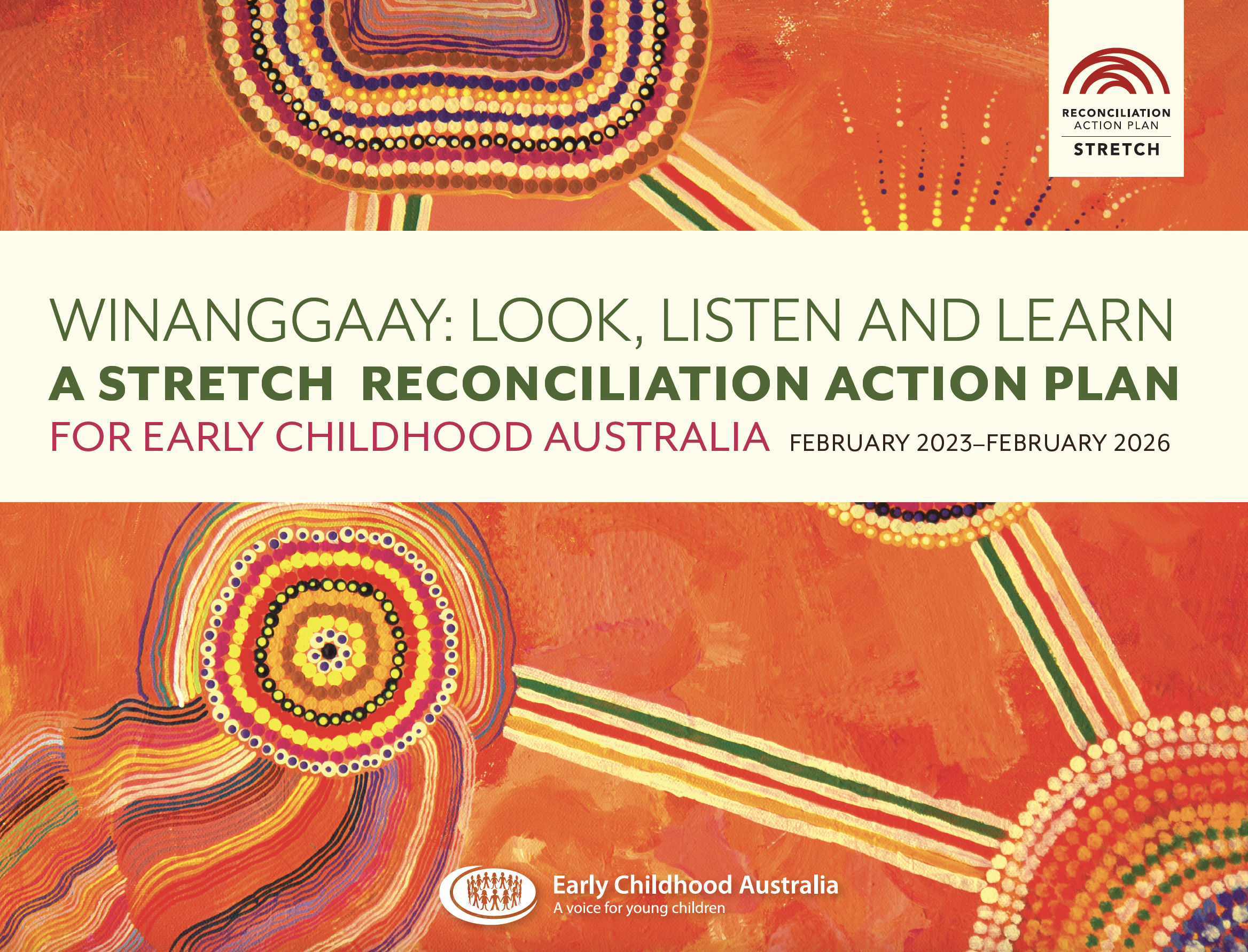
Early Childhood Australia is very pleased to share our second stretch Reconciliation Action Plan 2023 – 2026, Winanggaay: Look, Listen and Learn. In this Reconciliation Action Plan, we build on our previous work towards reconciliation and commit to amplifying the voices of Aboriginal and Torres Strait Islander peoples and communities. We include a greater commitment to and focus on Aboriginal and Torres Strait Islander peoples. We will collaborate, support and resource First Nations advocacy. We will also work to increase opportunities for representation and leadership across our network and across the early childhood sector.
Reconciliation in Action
Educators view the reconciliation cause as an important aspect of early learning and as a way to make a positive impact on the beliefs and understanding of our community. Understanding what reconciliation is and why it matters is intrinsic to ensuring that Aboriginal and Torres Strait Islander perspectives, histories, cultures, languages and knowledge systems are embedded within the practice and philosophies of all educators’—a key tool to advance reconciliation.
Fact sheet: Reconciliation in children’s education and care >>
Reconciliation Story Time Collection
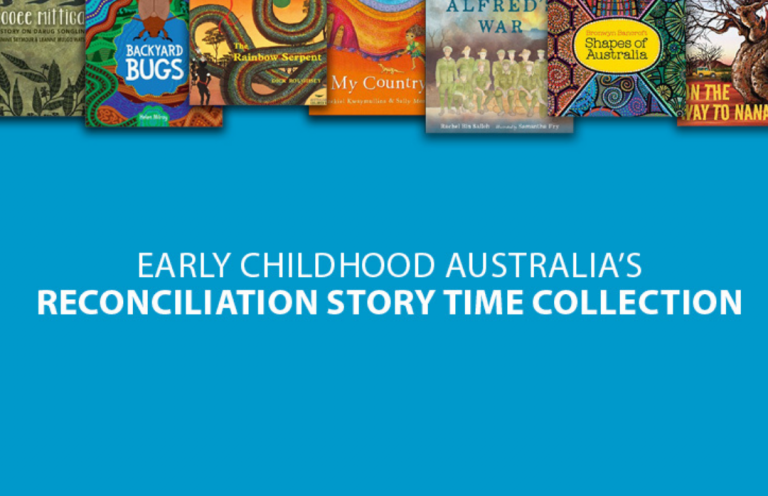
Early Childhood Australia (ECA) is pleased to introduce the Reconciliation Story Time Collection—a selection of beautiful, engaging and thought-provoking picture books created by Aboriginal and Torres Strait Islander authors and illustrators for young audiences. A key intended outcome of curating this collection is for all Australian children to hear Aboriginal and Torres Strait Islander stories from Aboriginal and Torres Strait Islander authors and illustrators.
The Spoke blog: Reconciliation resources
Early Childhood Australia has published a number of Blogs on the Spoke. These resourceful blogs focus on key topics about Aboriginal and Torres Strait Islander culture and histories.
Working Together to Ensure Equality for Aboriginal and Torres Strait Islander Children in the Early Years
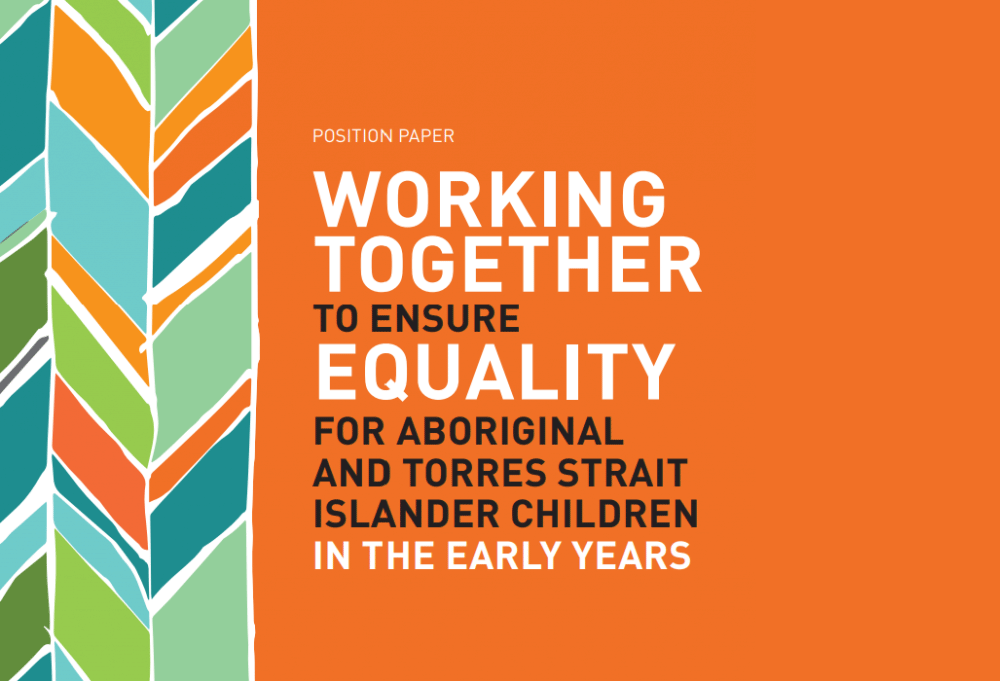
This position paper draws from the discussion paper, Ensuring equality for Aboriginal and Torres Strait Islander children in the early years, prepared by SNAICC – National Voice for our Children, and Early Childhood Australia. It highlights key issues that impact Aboriginal and Torres Strait Islander children, and makes recommendations to government and policy-makers.
ECA Shop: Reconciliation Resources
Explore a comprehensive list of resources and online information for Early Childhood Educators about supporting Aboriginal and Torres Strait Islander educators, cultural awareness, events, celebrations, relationships with families, creating culturally welcoming spaces and more.
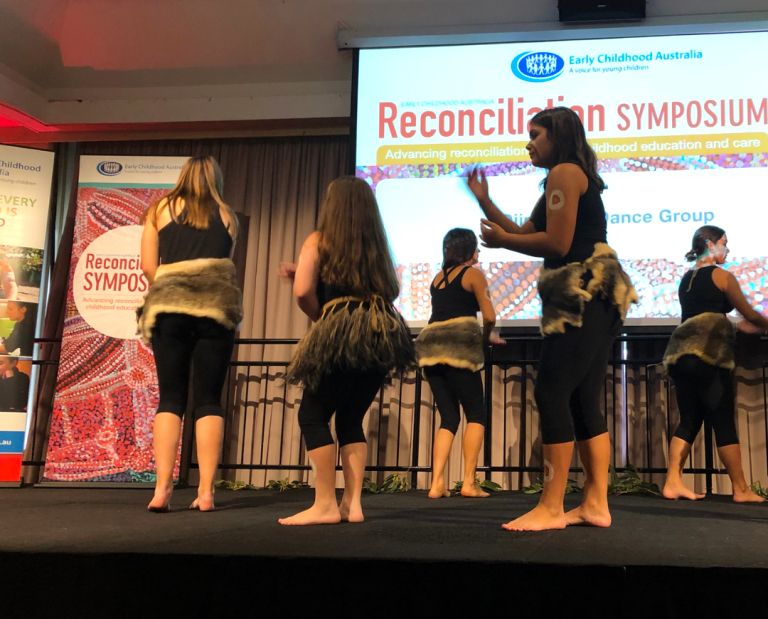
ECA Reconciliation Symposium
Building on over a decade of deep reflection and informed action, the ECA Reconciliation Symposium is evolving and continuing its success of bringing the sector together to consider the state of reconciliation in our nation and within children’s education and care. The Symposium’s focus is to illuminate the practical embedding of Aboriginal and Torres Strait Islander perspectives across early childhood education. Over two interactive days, participants will engage in facilitated discussions that nurture respectful dialogue, deep listening and shared understanding from Aboriginal and Torres Strait Islander and non-Indigenous presenters.
Partnerships
SNAICC Resources
SNAICC is the national non-governmental peak body for Aboriginal and Torres Strait Islander children. SNAICC work to fulfil the rights of our children, in particular, to ensure their safety, development and well-being.
Be You resources to support culturally respectful engagement with First Nations communities
Reflect, Respect, Respond: Protocols for culturally respectful engagement with First Nations communities was developed by Be You with a panel of Aboriginal and Torres Strait Islander educators from across Australia.
It explores practical information for educators and reflections about:
- connecting with First Nations communities
- developing family partnerships
- including culturally responsive curriculum
- discussing culturally sensitive topics in your early learning service or school
- writing policies for inclusive learning communities
Reconciliation Australia Resources
Reconciliation Australia is an independent not-for-profit organisation and the national body for reconciliation. Reconciliation Australia promotes and facilitates reconciliation by building relationships, respect and trust between the wider Australian community and Aboriginal and Torres Strait Islander peoples.
Three program areas deliver services, resources and advice to support reconciliation action within Australian early learning services, schools, universities, businesses, community groups, and government organisations:
- Reconciliation Action Plans (RAP)
- Narragunnawali: Reconciliation in Education
- Indigenous Governance Program
Reconciliation Australia’s work is underpinned by research in the State of Reconciliation in Australia Report and the Australian Reconciliation Barometer.
National Reconciliation Week 27 May – 3 June is Reconciliation Australia’s flagship public event.
Narragunnawali: Reconciliation in Education
Reconciliation Australia’s Narragunnawali: Reconciliation in Education program has resources and tools for schools and early learning services to contribute to the reconciliation movement.
Through the Narragunnawali online platform, schools and early learning services can develop a Reconciliation Action Plan (RAP), and teachers and educators can access professional learning and curriculum resources to support the implementation of reconciliation initiatives.
Narragunnawali (pronounced narra-gunna-wally) is a word from the language of the Ngunnawal people, Traditional Owners of the land on which Reconciliation Australia’s Canberra office is located. Narragunnawali means alive, wellbeing, coming together and peace, and is used with permission of the United Ngunnawal Elders Council.
More resources:
