Find the time for meaningful documentation
The age old debate in children’s services about the time available for the completion of documentation versus time spent with children has been long standing in our sector. This often divides the sector as some view that you must either choose to document learning or spend time with children. The alternative to this is when educators are taking documentation home with them to complete following their paid shift time. The position of early childhood educator working in a children’s service is complex, sophisticated and requires many diverse skills. The low pay and lack of recognition that is associated with the sector is not in line with the expectations of the role; however, to view our sector as being a profession we need to have an appreciation and respect for the professional guidelines and quality framework that guides our work. The documentation of children’s learning is highly positioned by the legislation and framework, and for good reason. Children’s learning in the early years is important and worthy. A profession, as defined by the Professional standards council: ‘A profession is a disciplined group of individuals who adhere to ethical standards. This group positions itself as possessing special knowledge and skills in a widely recognised body of learning derived from research, education and training at a high level, and is recognised by the public as such. A profession is also prepared to apply this knowledge and exercise these skills in the interest of others’ (www.professions.com.au/about-us/what-is-a-professional).
In order for the sector to move forward in terms of having the public acknowledge and view us as being a profession, we must firstly, as a group, stand behind our own professional guidelines. The Australian Children’s Education and Care Quality Authority (ACECQA) expects that a cycle of planning is maintained for groups of children and for individual children. Educators must also be reflective practitioners and committed to improving their own professional development and quality of practice. Reciprocal, respectful relationships must be formed with children and families and this needs to be evident in interactions throughout the day. How these requirements are interpreted and enacted throughout the day by educators in the learning centre are key to the provision of a quality learning environment.
Successful early education teams firstly must understand why documentation of children’s learning is important and specifically what learning is important. Not everything in a day or week is worthy of documenting. This is the issue with having a day book, as it is often used to diarise or summarise everything that happens throughout the day rather than focusing on only the meaningful, relevant learning. The same can be said for interests—too often a fleeting interest can suddenly change the entire curriculum and detract from the flow of learning. This style of documentation is time consuming and often has little meaning. Good strategies for time management are required to assist educators to find the time to document and reflect throughout the day, as often the two hours of off the floor weekly programing time is not enough to capture, evaluate and present thoughtful, inspiring pedagogical documentation worthy of a child’s rich learning and discovery. This is something that can be worked on with teams and developed over time. Systems and strategies can be used to effectively record important pieces of information throughout the day.
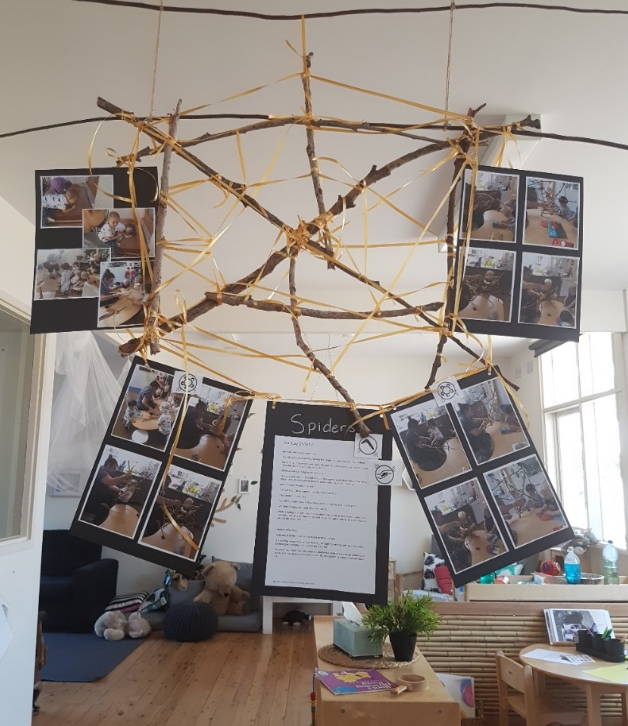
‘Efficient and effective leaders in early childhood now work smarter, not harder or longer’ (Rodd, 2013). Working smarter to achieve documentation goals will yield many riches in terms of providing a clear picture of a child’s learning, interests and strengths. When meaningful, well-written documentation is displayed in a beautiful way, it draws in the reader. When we apply our craft, our skills and knowledge in such a way, the reader will take away new ideas about what children are capable of, the importance of the learning and a respect for the professional skill of the educator. This is the road to follow towards improving the way we are perceived within the community and how the sector is perceived by our nation.
References
Rodd, J. (2013). Leadership in early childhood: The pathway to professionalism (4th Ed.). Sydney, NSW: Allen &Unwin.