
Posts
 https://www.earlychildhoodaustralia.org.au/wp-content/uploads/2026/02/Untitled-design-41-e1770595350504.png
398
580
Jessica Staines
https://www.earlychildhoodaustralia.org.au/wp-content/uploads/2026/03/ECA-logo-two-line-680px-slim-tran.png
Jessica Staines2024-02-05 09:57:572026-02-09 10:02:42A time to educate, not celebrate: 26 January
https://www.earlychildhoodaustralia.org.au/wp-content/uploads/2026/02/Untitled-design-41-e1770595350504.png
398
580
Jessica Staines
https://www.earlychildhoodaustralia.org.au/wp-content/uploads/2026/03/ECA-logo-two-line-680px-slim-tran.png
Jessica Staines2024-02-05 09:57:572026-02-09 10:02:42A time to educate, not celebrate: 26 January https://www.earlychildhoodaustralia.org.au/wp-content/uploads/2026/02/Untitled-design-15-1.png
630
1200
Dean Parkin
https://www.earlychildhoodaustralia.org.au/wp-content/uploads/2026/03/ECA-logo-two-line-680px-slim-tran.png
Dean Parkin2022-09-26 13:47:392026-02-02 14:01:28Listen to young people: The impact of our voices
https://www.earlychildhoodaustralia.org.au/wp-content/uploads/2026/02/Untitled-design-15-1.png
630
1200
Dean Parkin
https://www.earlychildhoodaustralia.org.au/wp-content/uploads/2026/03/ECA-logo-two-line-680px-slim-tran.png
Dean Parkin2022-09-26 13:47:392026-02-02 14:01:28Listen to young people: The impact of our voices https://www.earlychildhoodaustralia.org.au/wp-content/uploads/2026/01/Emma-Stenhouse.gif
630
1200
Emma Stenhouse
https://www.earlychildhoodaustralia.org.au/wp-content/uploads/2026/03/ECA-logo-two-line-680px-slim-tran.png
Emma Stenhouse2022-05-31 14:51:512026-01-30 14:56:40Inspiring richness and diversity in arts practice: An Aboriginal perspective
https://www.earlychildhoodaustralia.org.au/wp-content/uploads/2026/01/Emma-Stenhouse.gif
630
1200
Emma Stenhouse
https://www.earlychildhoodaustralia.org.au/wp-content/uploads/2026/03/ECA-logo-two-line-680px-slim-tran.png
Emma Stenhouse2022-05-31 14:51:512026-01-30 14:56:40Inspiring richness and diversity in arts practice: An Aboriginal perspective https://www.earlychildhoodaustralia.org.au/wp-content/uploads/2026/01/Cultural-awareness-blog-768x403-1.jpg
403
768
Early Childhood Australia
https://www.earlychildhoodaustralia.org.au/wp-content/uploads/2026/03/ECA-logo-two-line-680px-slim-tran.png
Early Childhood Australia2022-03-09 11:29:472026-01-30 11:58:13Exploring reconciliation and cultural awareness in early childhood
https://www.earlychildhoodaustralia.org.au/wp-content/uploads/2026/01/Cultural-awareness-blog-768x403-1.jpg
403
768
Early Childhood Australia
https://www.earlychildhoodaustralia.org.au/wp-content/uploads/2026/03/ECA-logo-two-line-680px-slim-tran.png
Early Childhood Australia2022-03-09 11:29:472026-01-30 11:58:13Exploring reconciliation and cultural awareness in early childhood https://www.earlychildhoodaustralia.org.au/wp-content/uploads/2022/01/Screenshot-2026-01-30-103724.png
406
1059
Early Childhood Australia
https://www.earlychildhoodaustralia.org.au/wp-content/uploads/2026/03/ECA-logo-two-line-680px-slim-tran.png
Early Childhood Australia2022-01-24 09:28:152026-03-24 14:41:40Walking together
https://www.earlychildhoodaustralia.org.au/wp-content/uploads/2022/01/Screenshot-2026-01-30-103724.png
406
1059
Early Childhood Australia
https://www.earlychildhoodaustralia.org.au/wp-content/uploads/2026/03/ECA-logo-two-line-680px-slim-tran.png
Early Childhood Australia2022-01-24 09:28:152026-03-24 14:41:40Walking together https://www.earlychildhoodaustralia.org.au/wp-content/uploads/2021/06/Screenshot-2026-01-29-122742-e1769650182481.png
530
1304
Adam Duncan
https://www.earlychildhoodaustralia.org.au/wp-content/uploads/2026/03/ECA-logo-two-line-680px-slim-tran.png
Adam Duncan2021-06-17 11:15:022026-01-30 11:51:03Reconciliation storytelling
https://www.earlychildhoodaustralia.org.au/wp-content/uploads/2021/06/Screenshot-2026-01-29-122742-e1769650182481.png
530
1304
Adam Duncan
https://www.earlychildhoodaustralia.org.au/wp-content/uploads/2026/03/ECA-logo-two-line-680px-slim-tran.png
Adam Duncan2021-06-17 11:15:022026-01-30 11:51:03Reconciliation storytelling https://www.earlychildhoodaustralia.org.au/wp-content/uploads/2026/01/Use-your-voice-for-change.jpg
403
768
Jo Goodwin
https://www.earlychildhoodaustralia.org.au/wp-content/uploads/2026/03/ECA-logo-two-line-680px-slim-tran.png
Jo Goodwin2021-01-22 13:55:532026-01-28 14:01:51Use your voice for change
https://www.earlychildhoodaustralia.org.au/wp-content/uploads/2026/01/Use-your-voice-for-change.jpg
403
768
Jo Goodwin
https://www.earlychildhoodaustralia.org.au/wp-content/uploads/2026/03/ECA-logo-two-line-680px-slim-tran.png
Jo Goodwin2021-01-22 13:55:532026-01-28 14:01:51Use your voice for change https://www.earlychildhoodaustralia.org.au/wp-content/uploads/2026/01/adam-duncan-secondary.png
702
587
Early Childhood Australia
https://www.earlychildhoodaustralia.org.au/wp-content/uploads/2026/03/ECA-logo-two-line-680px-slim-tran.png
Early Childhood Australia2019-07-10 11:15:212026-03-19 11:19:47Reflecting on NAIDOC Week
https://www.earlychildhoodaustralia.org.au/wp-content/uploads/2026/01/adam-duncan-secondary.png
702
587
Early Childhood Australia
https://www.earlychildhoodaustralia.org.au/wp-content/uploads/2026/03/ECA-logo-two-line-680px-slim-tran.png
Early Childhood Australia2019-07-10 11:15:212026-03-19 11:19:47Reflecting on NAIDOC Week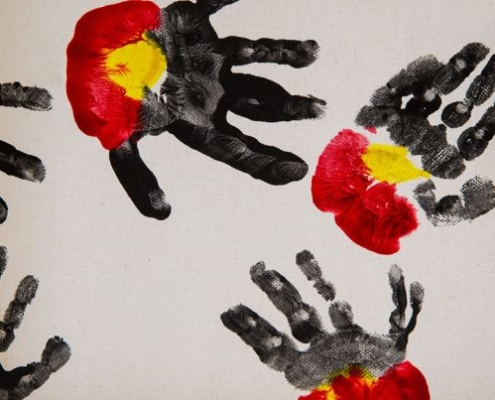 https://www.earlychildhoodaustralia.org.au/wp-content/uploads/2026/01/SHARING-AUS-IN-CULTURE-768x403-1.jpg
403
768
Rebecca Rechichi
https://www.earlychildhoodaustralia.org.au/wp-content/uploads/2026/03/ECA-logo-two-line-680px-slim-tran.png
Rebecca Rechichi2019-05-30 09:43:452026-01-22 09:49:21Sharing in Australia’s culture
https://www.earlychildhoodaustralia.org.au/wp-content/uploads/2026/01/SHARING-AUS-IN-CULTURE-768x403-1.jpg
403
768
Rebecca Rechichi
https://www.earlychildhoodaustralia.org.au/wp-content/uploads/2026/03/ECA-logo-two-line-680px-slim-tran.png
Rebecca Rechichi2019-05-30 09:43:452026-01-22 09:49:21Sharing in Australia’s culture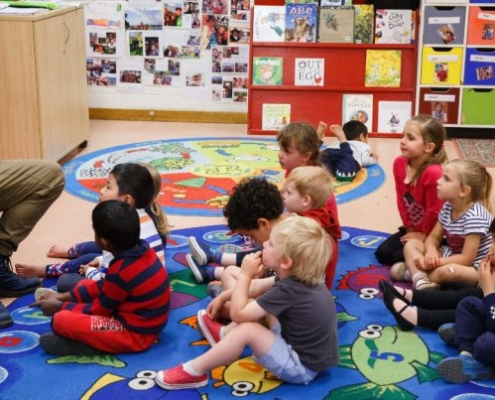 https://www.earlychildhoodaustralia.org.au/wp-content/uploads/2026/01/Reconciliation-blog-AD-768x403-1.jpg
403
768
Adam Duncan
https://www.earlychildhoodaustralia.org.au/wp-content/uploads/2026/03/ECA-logo-two-line-680px-slim-tran.png
Adam Duncan2019-04-26 08:10:182026-01-22 08:14:05Make it personal and meaningful: educators and reconciliation
https://www.earlychildhoodaustralia.org.au/wp-content/uploads/2026/01/Reconciliation-blog-AD-768x403-1.jpg
403
768
Adam Duncan
https://www.earlychildhoodaustralia.org.au/wp-content/uploads/2026/03/ECA-logo-two-line-680px-slim-tran.png
Adam Duncan2019-04-26 08:10:182026-01-22 08:14:05Make it personal and meaningful: educators and reconciliation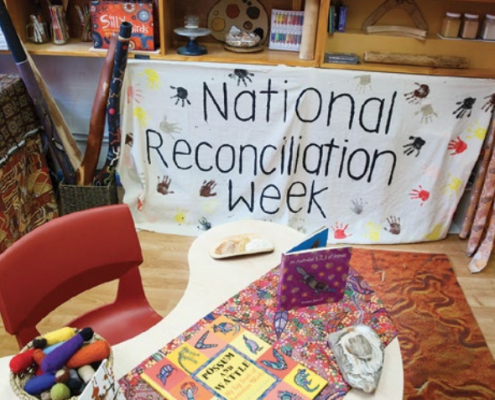 https://www.earlychildhoodaustralia.org.au/wp-content/uploads/2026/01/Cultural-competence-and-reconciliation3.png
710
590
Rachael Phillips
https://www.earlychildhoodaustralia.org.au/wp-content/uploads/2026/03/ECA-logo-two-line-680px-slim-tran.png
Rachael Phillips2019-04-20 15:50:412026-01-22 08:03:38My reflections on reconciliation
https://www.earlychildhoodaustralia.org.au/wp-content/uploads/2026/01/Cultural-competence-and-reconciliation3.png
710
590
Rachael Phillips
https://www.earlychildhoodaustralia.org.au/wp-content/uploads/2026/03/ECA-logo-two-line-680px-slim-tran.png
Rachael Phillips2019-04-20 15:50:412026-01-22 08:03:38My reflections on reconciliation https://www.earlychildhoodaustralia.org.au/wp-content/uploads/2026/01/Australia-Day-Blog-768x403-1.jpg
403
768
Early Childhood Australia
https://www.earlychildhoodaustralia.org.au/wp-content/uploads/2026/03/ECA-logo-two-line-680px-slim-tran.png
Early Childhood Australia2019-01-23 08:22:412026-03-24 17:31:21A change of heart as well as date
https://www.earlychildhoodaustralia.org.au/wp-content/uploads/2026/01/Australia-Day-Blog-768x403-1.jpg
403
768
Early Childhood Australia
https://www.earlychildhoodaustralia.org.au/wp-content/uploads/2026/03/ECA-logo-two-line-680px-slim-tran.png
Early Childhood Australia2019-01-23 08:22:412026-03-24 17:31:21A change of heart as well as date