Portfolios: Pedagogical documentation or souvenir?
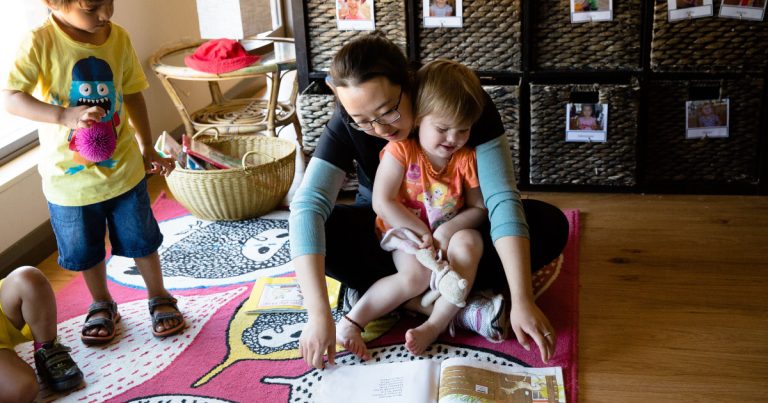
KAREN HOPE shares some key discussion points after facilitating a group of educators, who were delving into re-thinking ways to document learning and development for educators and children. Karen asked the group ‘what current documentation practices might they leave behind?’—This opened up ideas to what changes could be implemented to create documentation to improve ideas, strategies, interpretations, and research.
I recently facilitated a group of early childhood educators in re-thinking ways they document learning and development—both their own and children’s. To begin with, they considered what the term documentation meant, and I proposed that documentation is the search for meaning.
As educators, we are required to create documentation that encourages us to be focused, active and reflective in our design decisions. Documentation provides us opportunities to keep track of our steps, and not only communicate the pathways we took, but to also reconstruct and relaunch our work. Documentation can provide a context where theories and ideas are listened and responded to, and in addition to revealing what children research, learn and think, it should also reveal what educators learn and think.
To create documentation that better reflects ideas, strategies, interpretations, and research; I asked the group to consider what current documentation practices might they leave behind?
The educators suggested portfolios.
I asked, ‘What are portfolios, and who are portfolios for’?
The responses were candid and insightful; words such as ‘memorabilia’, ‘mementos’ and ‘visual records’ were used. Responses suggested the intended audience of portfolios were children and families. They are a ‘keepsake’, a reminder of a child’s time in the service, or as one educator told me, ‘They are like a souvenir’. This educator aptly described what, perhaps, many portfolios have become, and the comment encouraged other educators to critically think about what their own portfolios represented. They agreed that portfolios have the potential to offer more than providing children and families a visual representation of the children’s presence in the early learning space.
 Reflecting on this discussion and having seen a variety of portfolios in early learning environments, I’ve considered whether portfolios have become a symbol of an experience, an object that evokes memories of a certain time, or a memento. Are they more like a souvenir, or a snow globe, rather than evidence of children’s and educators’ learning and development? Portfolios may not be a strategy of pedagogical documentation that they are often held up to be.
Pedagogical documentation—a term used widely in the Reggio Emilia project—requires us to shift from documentation that has historically relied on developmental and objective knowledge of children (and is often retrospectively viewed), to a more nuanced approach that places both process and product by children and educators as key to creating documentation, which reflects the multiple perspectives about the children, educators, context, and environment.
The portfolio as a pedagogical documentation strategy can provide educators the opportunity to do this, and make explicit the footsteps of children, educators, and families. The portfolio reflects what we are thinking, researching and learning. It should be the construction of traces left behind.
Portfolios can also give children a voice, where they can document their own learning and development. They also help us acknowledge children’s rights to be the primary authors of their lives. When done well, portfolios provide children, families and educators opportunities to see themselves through the thoughts and ideas of others. They can create a context where theories and ideas are legitimised and responded to. Educators need to consider that they are equal beneficiaries in this process.
At your next staff meeting try to devote some time for a pedagogical documentation inventory. Consider the following:
- What are the advantages or disadvantages of what you are currently doing? What might be some different approaches? How are you going to find out about them?
- Who is advantaged or disadvantaged by your documentation decisions?
- In your documentation strategies, what are the ethical considerations?
- Are you documenting your own thinking, strategies and interpretations alongside those of children?
- What are the family/community views on the documentation that you share with them?
- Do children have opportunities to make documentation decisions?
- How are children reviewing the work?
- Does the documentation focus on learning or only what children produced?
- Does the documentation add to your body of knowledge both regarding children’s learning and development and educator learning and development?
- Does the documentation allow the work to be re-launched?
Educators work best when they share understandings about children’s learning, and agree on approaches to curriculum design and pedagogical practices. Portfolios should shine a light on theory, research, ideas, learning, and development. This service has decided to leave portfolios behind in 2020 and focus on inquiry books instead. A step towards enriching, challenging and reflecting on practice.