
Supporting children in complex families
Developing and delivering an innovative approach for supporting children in complex families to attend an early childhood education program
PROFESSOR LINDA HARRISON and researcher CATHERINE JONES write about their upcoming Round Table discussion at the 2020 AJEC Research Symposium, titled Nurturing children and families through staff professional development. They are working on a project across New South Wales, to encourage children in complex families to attend an early childhood service before the first year of school. Here, they share phases of their project and outcomes that educators have noticed within their service, after implementing this program.
We are so excited to be sharing our research at the Australiasian Journal of Early Childhood (AJEC) Research Symposium. Seven members of the team (Linda, Catherine, Belinda, Manjula, Fay, Susan, and Sandie) will be explaining the work we are doing in three diverse communities in New South Wales. It is a project we developed for the NSW Department of Education, whose interest was in exploring the use of ‘non-fee incentives’ to encourage children in complex families to attend an early childhood program in the year before school.
All children have a right to attend high quality early childhood education (ECE). But for many, especially those from disadvantaged backgrounds, this right is not realised. The information collected by the Australian Government every three years through the Australian Early Development Census (AEDC) shows very clearly that a higher percent of children from more disadvantaged areas have developmental vulnerabilities in their first year of school. They are also less likely to attend a preschool program in the year before school. The purpose of our project is to work with early childhood educators in communities with high levels of socio-economic disadvantage to help them understand the barriers to participation in ECE in their own communities and support them to find ways to increase enrolment and attendance of preschool aged children.
In Phase 1 of our project, we completed a thorough review of the literature and identified a number of barriers that impact on enrolment and attendance for children from low socio-economic status (SES) backgrounds. We grouped these into five key areas:
- Difficulties with access to early childhood education, such as transport, location of early childhood services, time constraints and navigating the complexity of the system (registering for fee relief, etc).
- Perceived or real lack of high quality early childhood education places and/or long waitlists.
- Indirect financial costs, such as for food, clothing, lunch boxes / school bags, and excursions.
- Lack of comfort, trust and cultural fit with related concerns about relevance of the program and parents’ confidence in their children’s abilities to cope with or benefit from preschool.
- Family beliefs and priorities, e.g. for families faced with stress and trauma, daily survival takes priority over early childhood education.
In Phase 2 of the project, we drew on contemporary models for effecting behavioural change, combined with an informed understanding of the barriers to participation in ECE and the facilitators of participation, to develop an innovative intervention package. The intervention was designed as a package for ECE services within a local community. It included a Service Support Visits, a 4-module Professional Learning Program, and access to Community Incentives Funding for non-fee incentives to facilitate children’s participation.
The story so far…
Over the past year, we have had the pleasure of working with three communities with wonderful, dedicated professionals in a highly collaborative approach. The centre directors and educators worked together with the researchers to:
1) develop an understanding of the local contextual barriers to enrolment and regular attendance in ECE and,
2) to develop locally relevant interventions. We have already seen some great initiatives in these communities and some positive outcomes.
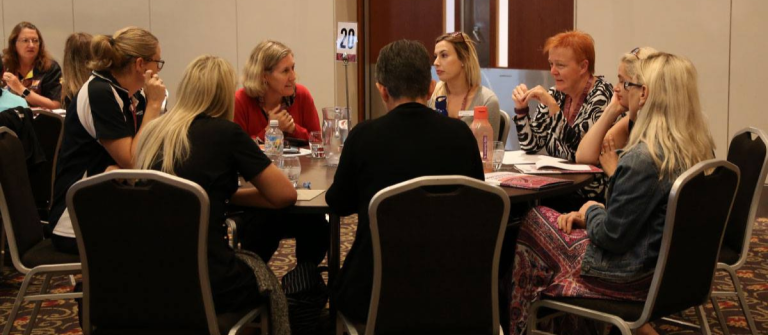
In an online evaluation of the intervention, participants noted that whilst they had previous experience of working with complex families, the Professional Learning Program (PLP) was worthwhile and beneficial for learning about the challenges of attendance for these families. Further, educators noted that it was enlightening to learn about the challenges of supporting families in other service types. In particular, they appreciated the networking and collective discussions that were facilitated through the PLP sessions, which they saw as beneficial for sharing experiences, expertise and strategies for supporting families.
As one educator said:
Meeting with other services bought an understanding of ‘what is reality’ in terms of accessing early childhood education in the wider community. This in turn made it easier to recognise barriers existing for the families and children that attended XXX. And I must say identifying the barriers was the easy part of the project. Deciding on the best strategies to implement was a world of difficult!! The content of the project was great, but it was the people and the discussions that made the biggest impact.
The Community Incentives Funding (CIF) was very valuable for supporting enrolment and attendance of families in ECE. Some participants noted that promotion activities, advertising and community engagement had increased awareness of their service in the community. Another wrote about how the PLP had led to timetable changes to be more responsive to families’ needs. As a result:
Arrival times are a lot more consistent and there seems to be less anxiety. Children arrive at the centre at 9.30am and are collected for home shortly after 3.30pm. This has been a great benefit to our families and children. They have more time to chat with educators about their child’s day and assist their children to collect and pack away hats drink bottles and so on.
Hear more about this innovative, effective and exciting project at AJEC. We look forward to sharing our experiences.