Why choose early childhood: A male perspective on working as an educator
TRISTAN PAGE is a dedicated early childhood educator with a true passion for his job. He shares his experiences as a man in the early childhood education sector, over the last 18 years. Tristan explains how he incorporates a personal perspective into everyday teaching within an educational program.
As a man working in the early childhood sector, like all educators, I aim for the best educational outcomes and wellbeing of the children and families that I serve. But ever since I entered the profession as an 18-year-old—first as a student and then as a potential employee—people have been asking me why I wanted to, and continue to, work with young children. My answer has always been: ‘Why not?’
Initially, I assumed the question was being asked out of interest, but it was apparent that people (usually those who didn’t know me) had concerns about my gender rather than my ability to care for children—or rather; they had reservations about my entry into a traditionally female-dominated profession. This silent or passive discrimination hurt and contributed to me often feeling on edge and under scrutiny. Sometimes the judgments have been overt. People have commented that I was ‘manlier’ (what does that even mean?) than most male educators they had met. The view that male educators are typically not ‘manly’ needs to be unpacked and overthrown immediately. It is not a fair comparison for any man and it flies in the face of modern developments on how people choose a career outside of outdated gender role assumptions.
For many years I tried to simply fit into educational teams. But I have grown to understand that my impact (and my responsibility) is greater than that. As early childhood practitioners, we are urged to promote diversity by providing ample opportunities for children to notice and rejoice in our differences. This should surely be something educators make an impassioned effort to work towards when critically reflecting upon their own individual perspectives and the skills they can bring to an educational program.
I do not take for granted the time I have to reflect on current strengths and emerging interests within a program. I think about how I can positively impact children’s learning opportunities and holistic development. For example, there are several preschool-aged boys in the program where I work that are interested in rugby and rugby league. Their interest includes confidently sharing their knowledge of professional players, known clubs and recognising the emblems that symbolise them. To demonstrate the respect I have for their interest, I have created a ‘Wall of Footy’ within the program. The boys regularly approach me and request a new team to be added. I waste little time in adding their contributions and finding out more about their sources.
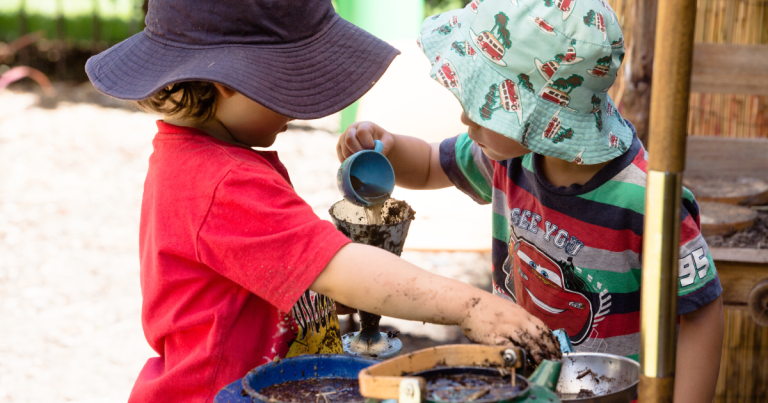
Naturally, this common interest in ‘footy’ leads to the children wanting to play it for themselves. Not all the time but sometimes, the boys want me to play as well-this reminds me of my own childhood when my father took time to follow in my passion for rugby league. I take time to involve the children in the setting of agreed guidelines in order to keep them safe and allow for their voices to be heard. As the interest grew, it became immediately apparent they wanted a chance to engage in ‘rough and tumble’ play. I support children to understand that tackling and wrestling is not for the purpose of hurting one another and to be a good friend we need to stop and help if someone appears hurt.
Rough and tumble play occurs when children wrestle, roll, tackle and need not be confused with fighting. The setting of clear boundaries allows the children to interact in a way that is safe for themselves and their peers. My encouragement of this type of play allows me to guide children in developing strength, movement, and social skills.
There is a developing belief within professional and academic circles that men are necessary within early childhood settings and provide value in terms of the healthy holistic development of children. This has guided me in being more comfortable with my role, and given me tools to ably express my perspective as a man working in the early childhood sector.
Over the last eighteen years, I have had the pleasure of working alongside and being mentored by inspiring women. They have never questioned my intentions for working in the profession I love. Instead, they watched my interactions with children and saw how I worked to build a positive rapport with children and collaborated with parents to gain excellent outcomes for children. These leaders challenged, and continue to challenge, my capabilities regardless of my gender.
The number of men working in early childhood (2 percent of the sector in Australia) is staggeringly low (Paton, 2018). They are turned away by low pay rates, the aforementioned lack of male representation and a long-held belief that early education ‘is women’s work and men are not designed to work with young children’. Despite these challenges, I had the courage to follow a career that interested me. As an early childhood professional, I do my utmost to instill within children a similar belief that they can do whatever they put their mind to, regardless of gender.
I was encouraged as a young boy to follow pursuits that were physical in nature, in no way do I see these as typically male. I encourage all children to engage with these activities.
So, if you are a young man (or know of one) that may be considering joining me in a rewarding profession that can come with working with children in early childhood education and care (ECEC), do not hesitate. I have been fortunate enough to meet several other men who were equally as passionate about having a positive impact on the lives of young people. Children need you!
Lastly, there are two useful Facebook resources to have a look at, one is a community of men in ECEC that you can be a part of and the other is an association page to follow.
- Males in early childhood education (www.facebook.com/Males-in-Early-Childhood-Education-234007526614527/)
- Australian Association for men in early childhood (www.facebook.com/AAMECSA/)
References
Paton, M. (2018, January 18). Why is there a shortage of male early childhood educators? [Blog post]. Retrieved from www.geteduca.com/blog/male-early-childhood-educators-shortage. James, B. (n.d.).